Maintenance & Operations
Dust collector maintenance is the difference between a system that runs 20 years and one that fails in 5. Most shops know they should be doing it. Few do it on a schedule that actually matches what the equipment needs — and almost nobody finds out until a filter blows, a motor seizes, or an inspector flags accumulated dust in the ductwork.
The articles in this category cover real maintenance — what to check, how often, and what the warning signs look like before the failure. Differential pressure trends. Pulse-clean cadence. Filter replacement intervals by media type. Ductwork inspection and cleaning. Motor and bearing health. The unglamorous stuff that determines whether your $150K system delivers $150K of value or fails into a $40K repair bill.
These guides are written for the people who actually run the systems — maintenance supervisors, plant engineers, EHS managers — not the people who sell them.
What you’ll find in this category
- Dust Collection System Maintenance Guide — full scheduled-maintenance breakdown by component
- 7 Signs Your Dust Collector Is Undersized — diagnostics that look like maintenance issues but aren’t
- Save Energy with a VFD — reducing operating costs without sacrificing performance
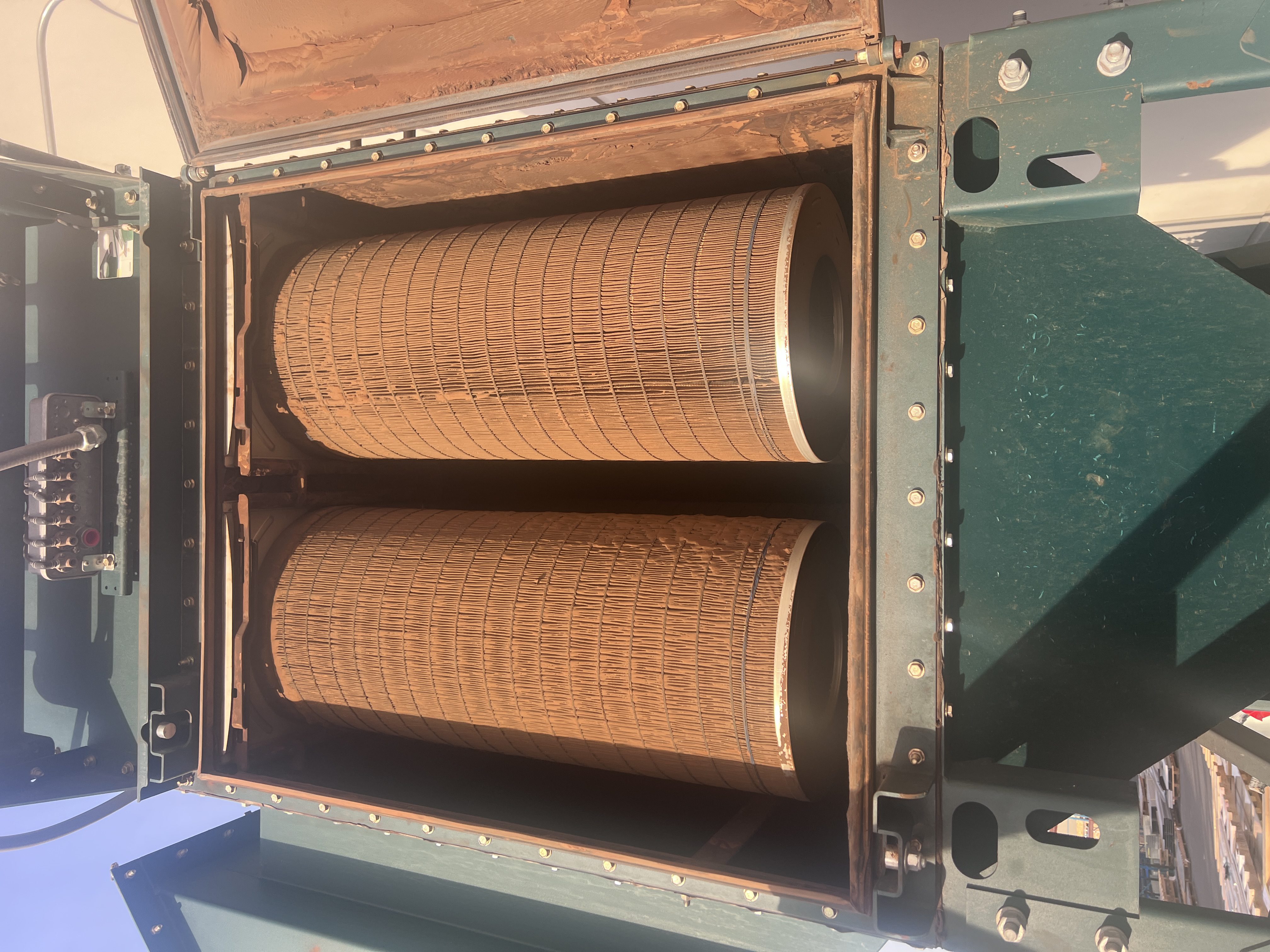
- Cartridge Filters — replacement intervals, media selection, when nanofiber pays off
- Baghouse Filters & Cages — bag life, cage inspection, common failure modes
The questions we get most
How often should dust collector maintenance actually happen?
Daily checks (visual inspection, Δp reading, dust bin level) take 5 minutes. Weekly: pulse-clean cycle test, compressed air check. Monthly: filter inspection, ductwork tap-test, motor amp draw. Quarterly: a full system audit by someone who knows what they’re looking at. Annual: filter change-out planning, full system service. The schedule scales with how hard the system runs — a 24/7 production system needs more frequent attention than an 8-hour single-shift operation.
When do filters actually need to be replaced?
Not on a calendar — on a differential pressure curve. Cartridge filters typically last 6–18 months. Baghouse bags last 2–4 years. HEPA filters last 1–2 years. But the real indicator is Δp behavior: when the gauge can’t be brought back down by pulse cleaning to its baseline range, the media is loaded past usable capacity. Replacing on calendar wastes money on the front end and ignores the warning signs on the back end. Replace on Δp behavior, not on the calendar.
What dust collector maintenance gets skipped most often?
Ductwork inspection. Filters get attention because everyone sees them. Ducts run overhead and out of sight, and nobody walks the duct with a flashlight until something fails. Dust accumulation inside ductwork is the leading cause of secondary explosions in combustible dust environments — and it’s almost always preventable with monthly visual inspection and an annual professional cleaning.
Can you do dust collector maintenance in-house or do you need a contractor?
Most daily and weekly checks should be in-house — your operators are closest to the equipment and will spot issues fastest. Filter changes and basic preventive work can be in-house with the right training. Annual full-system audits, ductwork cleaning, and explosion protection inspection are usually worth contracting out — those require specialized tools and certification, and getting them wrong creates liability you don’t want to carry.
Your next step
Every system we install includes a maintenance program tailored to the equipment and your operating schedule. Our maintenance plans cover scheduled service, filter replacement, ductwork cleaning, and annual compliance documentation.
If your system is overdue or you’re not sure where you stand, book a free assessment. We’ll inspect the system, document what’s needed, and give you a written maintenance plan you can execute in-house or hand to us.