
Wet Collectors
If you’re grinding aluminum, titanium, or magnesium, NFPA 660 treats wet collection as the preferred method — and it’s what we recommend. A wet collector pulls that dust into water, taking the ignition risk out of the collector instead of trying to contain it. 304 stainless, NFPA 660 compliant, 800 to 15,000 CFM.
Some dust just can’t go in a dry collector, period. Combustible metals — aluminum, titanium, magnesium, zirconium — will catch or blow inside a dry filter system, and NFPA 660 says so. Water’s the answer because it grabs the particle and kills the ignition risk at the same time, which no amount of explosion protection bolted onto a dry collector can actually do.
It’s not just the reactive metals, either. A wet collector is the right call any time you’re throwing hot sparks (grinding, deburring, torch cutting), running sticky stuff that plugs dry filters fast (buffing compound, polishing rouge), or handling dust that turns into a problem the second it dries out and goes airborne again. The water quenches the spark on contact and traps everything as a sludge you scoop out later — no filter fires, no dust getting back into the air, no explosion risk.
For combustible metal, you’ve got two proven product lines to pick from: AT Industrial and Micro Air’s Hydromax line — both built from the ground up as water-based systems for reactive dust. AT Industrial runs the full range, 800 to 15,000 CFM across eight models, all 304 stainless. Micro Air Hydromax brings NFPA 660 compliant collection with smarter controls and optional HEPA on the back end.
Every system we engineer is backed by our pass-or-free compliance guarantee. If it doesn’t pass OSHA or NFPA inspection because of how we designed or installed it, we come back and fix it on our dime. Installation is handled by certified crews in your state.
When Water Is the Right Way to Collect It
Combustible Metal Dust
Aluminum, titanium, magnesium, zirconium — these dusts are reactive, and NFPA 660 treats wet collection as the preferred method for them because water removes the combustion risk right at the point of capture. Dry collection carries a much heavier protection burden, and for some metals — niobium and tantalum — dry-type collection isn’t recognized at all.
Hot Sparks & Molten Particles
Grinding, deburring, and torch cutting throw sparks and particles north of 2,000°F. Spark arrestors handle a dry collector in plenty of cases — but some operations throw such a heavy spark load that water quenching is the only thing you can count on, especially once combustible material is in the mix.
Sticky & Hygroscopic Dust
Buffing compound, polishing rouge, certain waxes and resins — they blind a dry cartridge fast because the material’s just plain sticky. A wet collector grabs them in the water bath with no filter media to clog, and the captured material washes out as sludge when you clean it.
Hydrogen Gas Management
Here’s one people miss: reactive metals like aluminum and magnesium can make hydrogen gas when they hit water. A properly built wet collector has a self-venting drain (1.5″ NPT on the AT Industrial units) that lets that hydrogen out instead of letting it build up inside — a safety piece a generic water-bath setup may not have.
No Filter Replacement
Wet collectors use baffles and a water wash to pull dust out of the air — no cartridges to buy, no filter changes to schedule around. That kills the ongoing media cost and the downtime that comes with it. Your upkeep is sludge removal, water level, and the occasional cleaning.
Simpler Compliance
Because the water takes out the ignition source, a wet collector for combustible metal doesn’t need explosion vents, backblast dampers, fast-acting isolation valves, or chemical suppression. That trims both the upfront install cost and the inspection-and-maintenance load compared to a protected dry collector.
AT Industrial Wet Collectors
304 stainless, precision-balanced impellers, self-venting designs from 800 to 15,000 CFM — made in the USA since 1997 and built specifically for combustible metal dust.
C-Series Compact (800–2,500 CFM)
The workhorses for a single grinding, deburring, machining, or sanding station. Small enough to park right next to the dust source. Stainless impeller direct-coupled to the motor for max airflow and minimal shake.
Airflow: 800–2,500 CFM
Motors: 3–5 HP, TEFC 230/460V 3-phase
Construction: 304 stainless steel, seam welded
Features: Auto water level, sound suppression, SS sludge rake
Optional: NEMA electrical package, extended sump
C-Series Mid-Range (3,000–5,000 CFM)
For multi-station and heavy-production work. The C7-3000 and C15-5000 take the bigger dust loads off buffing lines, grinding cells, and larger machining setups. C15-5000 and up come standard with polypropylene doors.
Airflow: 3,000–5,000 CFM
Motors: 7–15 HP, TEFC
Construction: 304 stainless steel, seam welded
Features: Polypropylene doors (C15+), auto water level
Standard: Self-venting 1.5″ NPT drain (prevents H₂ buildup)
C-Series Large (8,000–15,000 CFM)
Plant-scale collection for multi-station lines, aerospace machining cells, and high-volume grinding. The C40-15000 runs dual 20 HP motors and dual 26″ inlets. These come standard with the upgraded OSHA/NFPA electrical package.
Airflow: 8,000–15,000 CFM
Motors: Dual 20 HP (C40), TEFC 230/460/575V
Construction: 304 stainless steel, seam welded
Standard: OSHA/NFPA compliant electrical package
Interlocks: Water level monitoring, auto equipment shutdown
Standard on Every AT Industrial Wet Collector
304 seam-welded stainless throughout. Precision-balanced stainless impeller, direct-coupled to the motor. Internal baffle filtration — no cartridges to replace. Automatic water level control with a supply line connection. Front-access maintenance door with foam sound panels. Self-venting drain that keeps hydrogen from building up. Powder-coated exterior. Stainless sludge rake for cleanout. And every unit gets tested and run before it ships, to confirm it makes its CFM and holds its water.
Micro Air Hydromax Wet Collectors
NFPA 660 compliant collection with an agitated water bath, UL 508A-listed controls, and optional HEPA on the back end — built for combustible dust and robotic weld cells.
Hydromax WC5000
Micro Air’s main wet collector for combustible metal. An agitated water bath and internal baffles catch and hold the reactive dust. Skips the explosion vents, backblast dampers, fast-acting valves, and chemical isolation a dry collector would need.
Motor: 15 HP
Construction: 304 stainless steel, single sump
Controls: UL 508A-listed, NFPA-compliant interlocks
Options: HEPA after-filter, powered sump fan, vacuum attachment
Finish: Stainless or black marine-grade epoxy
Hydromax WCCAB
A clean-air booth that puts an enclosed work station and wet collection in one unit. Good fit for an operator grinding, deburring, or finishing combustible metal who needs both containment and capture in a single footprint.
Motor: 15 HP
Construction: 304 stainless steel
Configuration: Enclosed booth with integrated wet collection
Controls: UL 508A-listed, NFPA-compliant interlocks
Finish: Stainless or black marine-grade epoxy
Hydromax RWC (RWC2500 / RWC5000)
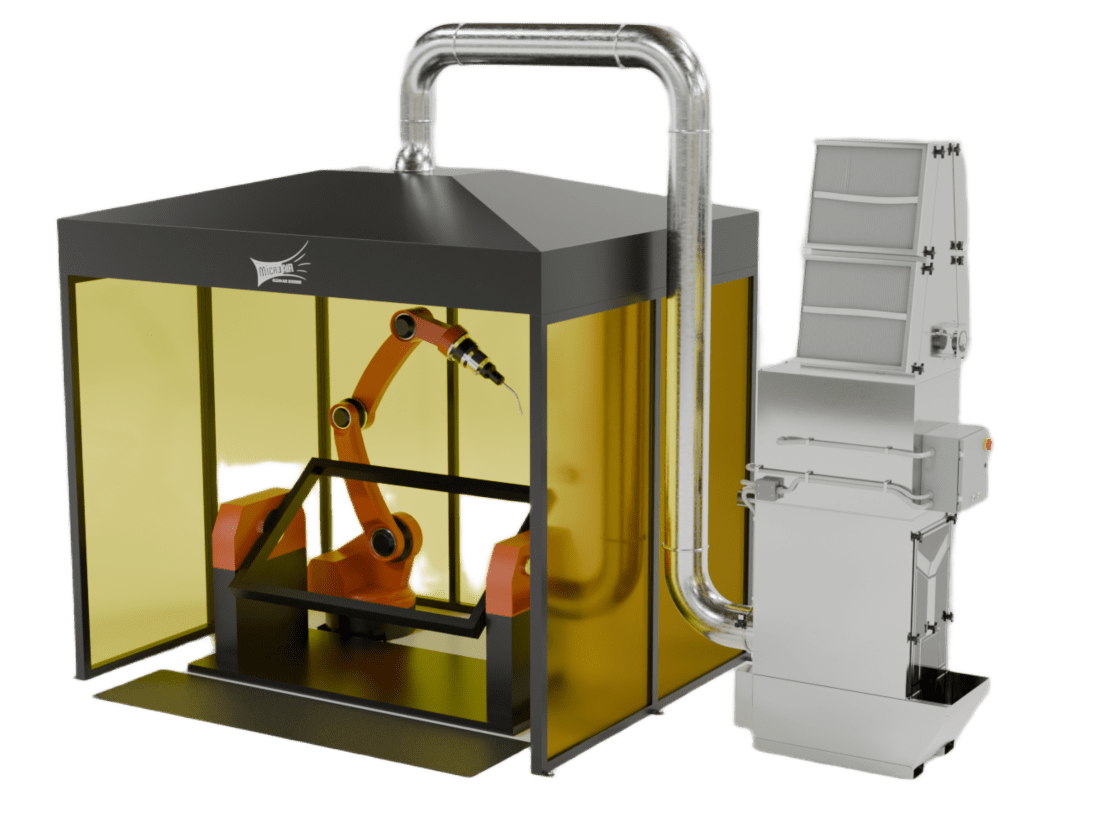
Micro Air’s fully patented wet collector built specifically for robotic weld cells running combustible metals — the only system of its kind on the market. VFD control holds steady airflow off the duct static, and dual A-frame after-filters let you return air safely to the floor. The agitated water bath puts out hot embers on contact, so a stray spark doesn’t become a filter fire.
Application: Robotic weld cells (combustible metals)
Controls: VFD with Intelli-Touch
After-Filtration: Dual A-frame + MERV 16 rinsable, safe air return
Compliance: Fully patented · NFPA 660 for combustible metal dust
Safety: Interlocks, temp monitoring, auto sump level
Where a Wet Collector Is the Right Tool
Aluminum Grinding & Machining
The most common combustible metal job there is. Aluminum dust is reactive — NFPA 660 treats wet collection as the preferred method for it, and it’s what we recommend.
Titanium Processing
Grinding, deburring, and machining titanium for aerospace and medical work. Titanium dust is highly combustible — wet collection is the standard’s preferred method and what we recommend.
Magnesium & Zirconium
About the most reactive metal dusts you’ll run into. Magnesium can ignite on its own at low concentrations. Wet collection is the only safe way to handle it.
Buffing & Polishing
Buffing compound and polishing rouge are sticky and blind a dry cartridge in a hurry. A wet collector handles them without clogging up.
Grinding & Deburring
Heavy spark loads off bench grinders, pedestal grinders, and automated cells. The water quenches sparks and hot particles the moment they hit.
Plasma & Torch Cutting
Plasma cutting reactive metal routes to wet collection until the dust is tested out of metal scope. Water tables and wet downdraft tables pair with a wet collector for full capture.
Aerospace Manufacturing
Machining, grinding, and finishing aluminum, titanium, and composite parts for aerospace and defense. Tight regulatory and quality demands.
Foundry Operations
Sand knockout, grinding, and finishing in foundries running aluminum or magnesium castings. High heat, heavy dust, combustible material.
How a Wet Collector Actually Grabs the Dust
It pulls the dirty air through a water bath, where the particles hit the water surface and get trapped. Internal baffles stir up turbulence that forces the air to change direction over and over, dropping out dust at every turn. What’s caught settles to the bottom as sludge, held safely in the water until you pull it out.
Because water’s doing the collecting instead of filter media, there’s nothing to replace and no filter to catch fire. The trade-off is you’ve got water to manage — keeping the level right, watching pH (especially with reactive metals), dealing with sludge, and treating the water if the sludge is hazardous. Worth knowing going in.
Water Level
Automatic controls hold the fill where it needs to be. Let the water drop below the operating level and your airflow and capture both fall off. AT Industrial and Micro Air units both include auto-fill and level monitoring.
Sludge Removal
Caught dust piles up as sludge in the sump. The stainless sludge rake (standard on AT Industrial) makes manual cleanout easier. Their optional sludge vacuum system pulls the sludge and water, filters the water, and returns it to the sump.
Safety Interlocks
The NFPA-compliant electrical package watches water level and ties into your process equipment. Water gets too low or too high and the system shuts down both the collector and the grinder or machine it serves, so nothing runs without proper water in the tank.
Sludge Disposal
Metal sludge can count as hazardous waste depending on what you’re collecting. Reactive-metal sludge (aluminum, titanium, magnesium) has to be handled and disposed of per EPA and state rules. We help sort out the disposal side during system design.
Wet or Dry — How to Tell Which You Need
Go Wet When:
→ You’re collecting aluminum, titanium, magnesium, or zirconium
→ NFPA 660 treats wet as the preferred method for your material
→ Heavy spark loads off grinding or torch work
→ Sticky stuff that blinds dry filters (buffing, polishing)
→ You want to skip the cost of explosion protection hardware
→ You want to be done buying filters
Go Dry When:
→ You’re collecting non-combustible metal (steel, iron, stainless)
→ Wood dust, concrete, or general manufacturing dust
→ You need to recover and reuse the captured dust
→ Very fine fume that needs HEPA-level filtration
→ Water management isn’t practical where it’d sit
→ You need 99.99%+ HEPA efficiency
Not sure which way to go? Schedule a free assessment — we’ll look at your materials, your process, and your compliance picture, and tell you straight which one fits.
When a Wet Collector Is Not Your Answer
For combustible metal, wet collection is the standard’s preferred method and our recommendation — the alternatives exist but carry a protection burden most shops don’t want to own. But in the wrong spot a wet collector makes more headaches than it solves — so here’s when a dry collector — or another type from our full range of dust collectors — is the better call.
Non-Combustible Metal Dust
Steel, iron, and stainless dust aren’t reactive and don’t need wet collection. A cartridge collector handles them better, filters finer, and skips the water management. Putting a wet collector on non-combustible metal just adds cost and upkeep for no compliance gain.
Freezing Spaces
A wet collector can’t run in an unheated space that drops below freezing — the water bath and plumbing freeze, the unit gets damaged, and you’re down. If your building isn’t climate-controlled through winter, a dry system is really your only practical option.
No Drain or Water Hookup
A wet collector needs a water supply for the auto-fill and a drain for sludge and cleanout. If the spot you’d put it has neither, the plumbing cost can make it impractical — and there are dry configurations with spark arrestors that may work for your specific case instead.
You Need to Reuse the Dust
If your process needs the captured material back dry and usable — returning metal powder to production, say — a wet collector’s the wrong tool. What it catches comes out as wet sludge for disposal, not something you recirculate. A dry collector with proper explosion protection may be required if recovery’s part of the job.
You Need HEPA-Level Filtration
A wet collector separates particles well but doesn’t hit the submicron precision of HEPA. If you need verified 99.97%+ at 0.3 microns — cleanroom exhaust, pharmaceutical containment, that kind of thing — a dry system with HEPA on the back end is the right path.
Not Sure What Your Dust Is?
If you don’t know whether your dust counts as combustible under NFPA 660 — or you’ve got a mix — a dust hazard analysis (DHA) settles it before you commit to any equipment. We can fold that into your system design.
Related Resources
Let’s Get You the Right Wet Collector
Tell us what you’re processing, your production volume, and how many stations you’re running. We’ll point you at the right AT Industrial or Micro Air Hydromax unit — sized properly and NFPA compliant.
Serving metal fabrication shops across Arizona, California, Nevada, New Mexico, and Utah.