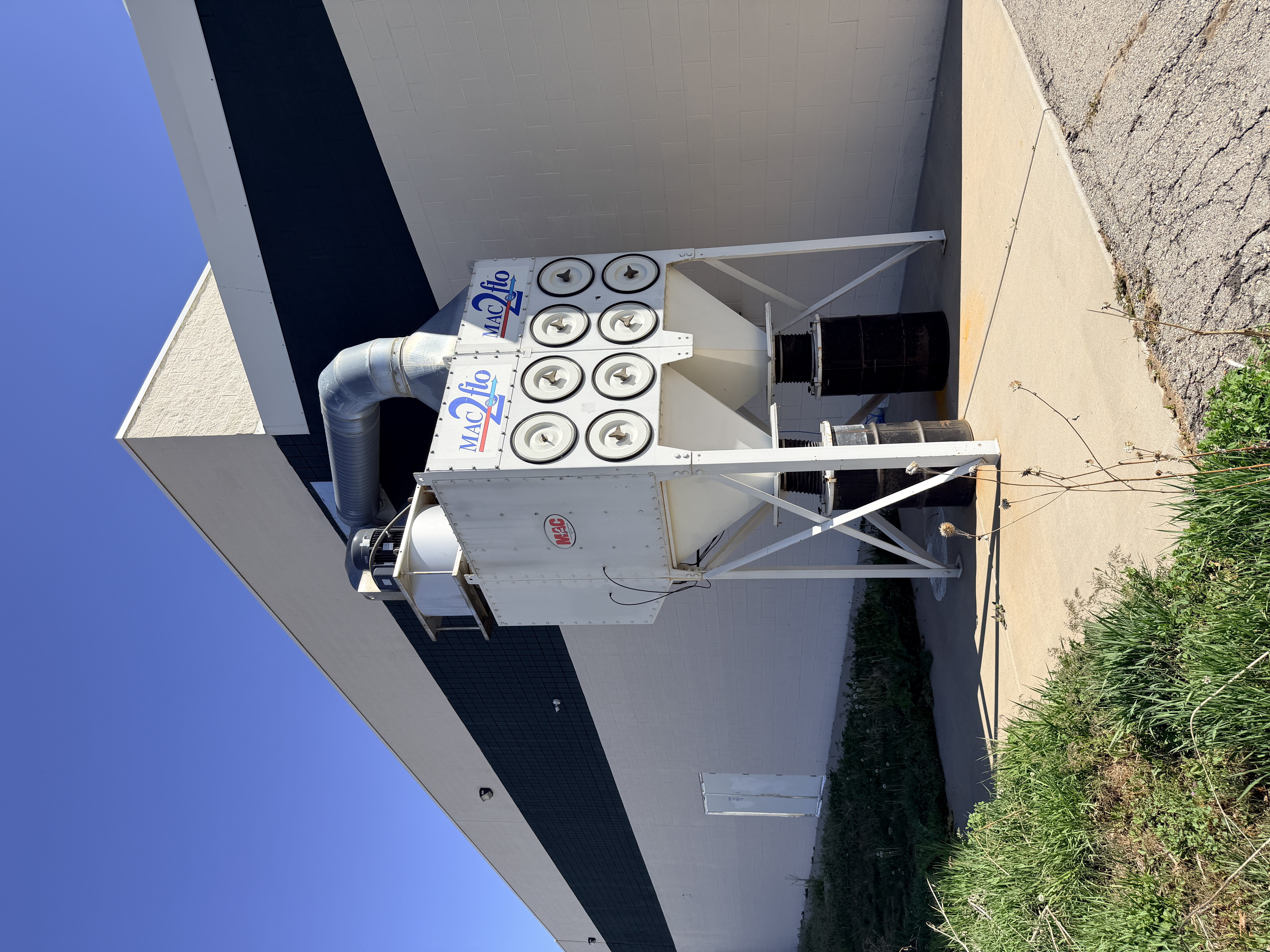
System Design & Engineering
Dust collection system design is where the difference between a system that works and a system that costs you twice gets decided. Most equipment will move air. Not all of it will move the right air, in the right direction, at the right velocity, for the right amount of time. The difference is engineering — and engineering is what separates a quote that finishes on budget from one that doubles mid-project.
The articles in this category cover the engineering layer underneath every system we install. CFM math. Capture velocity at the hood. Transport velocity in the duct. Return air decisions. VFD energy strategy. The unglamorous numbers that determine whether your collector pulls dust away from your operators or just hums in the corner.
These guides aren’t marketing — they’re the calculations that show up in stamped engineering drawings for permit approval.
What you’ll find in this category
- Save Energy with a VFD — variable frequency drive math, payback periods, when it makes sense
- Return Air vs. Exhaust Dust Collection — when to recirculate, when to exhaust, NFPA implications
- Baghouse vs. Cartridge Dust Collectors — design tradeoffs by application
- Industrial Ductwork Design — sizing, supports, transport velocity, where corners get cut
- 7 Signs Your Dust Collector Is Undersized — diagnosing a system that’s outgrown its design
- Architect’s Guide to Specifying — for MEP engineers and architects spec’ing systems
The questions we get most
What’s the most common dust collection system design mistake?
Undersizing the ductwork to save money on the install. Every shop that wishes they’d “spent the extra $5,000 on bigger duct” eventually pays it — usually three times over — when capture velocity drops below threshold, dust settles in the pipe, and the system has to be partially torn out and replaced. Duct sizing is where the system either works for 20 years or fails inside 24 months.
How does dust collection system design differ from generic ventilation?
Dust collection has to maintain transport velocity throughout the entire duct network — typically 3,500–4,500 FPM depending on material. Generic ventilation just needs to move air. The math is fundamentally different. A standard HVAC engineer can size air handlers all day; sizing a dust collection system requires understanding particle behavior, dust loading curves, fan static pressure, and explosion protection geometry. Different discipline, different rulebook.
Do you need engineered drawings for every dust collection install?
For anything beyond a portable extractor, yes. Permit-issuing authorities, insurance carriers, and NFPA 660 inspectors all expect stamped engineering documentation showing CFM calculations, duct sizing, hood placement, and explosion protection sizing. “We eyeballed it” isn’t a defense after a failed inspection. Engineering up front is cheaper than remediation after.
What does the dust collection system design process actually look like?
It starts with a site assessment — measuring your operations, identifying dust generation points, sampling the dust if combustibility hasn’t been characterized. From there: CFM calculations per machine, duct routing and sizing, hood selection, collector specification, explosion protection sizing, and electrical/control design. The output is a stamped drawing set plus a compliance documentation package. Typical timeline: 1–3 weeks for design, depending on facility complexity.
Your next step
Every dust collection system design we produce is backed by our pass-or-free compliance guarantee. The system meets spec and passes inspection, or we fix it at no charge.
If you’re spec’ing a new system or trying to figure out why an existing one isn’t keeping up, book a free assessment. We’ll measure, calculate, and tell you exactly what’s happening — and what the math says you need to do about it.