
Building the Future of Welding Education: Jordan Porterfield and Central Arizona College’s Mobile Training Revolution
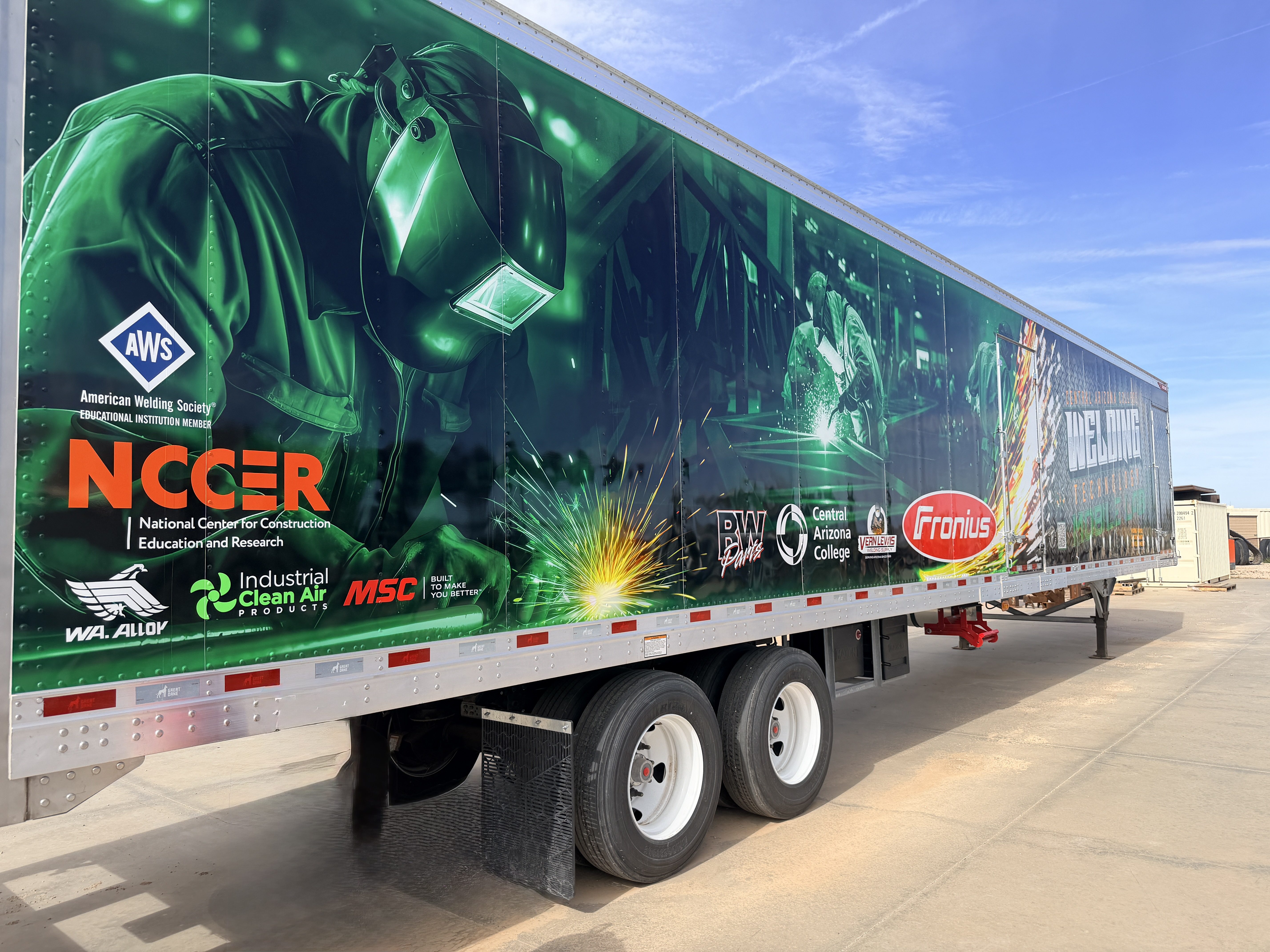
When you walk into a welding classroom at Central Arizona College, something immediately feels different. Sure, there are welding booths, metal stock, and the familiar smell of hot metal. But there’s something else — an energy, a purpose, a sense that what’s happening here goes far beyond just teaching someone how to lay a bead.
That difference starts with people like Jordan Porterfield and his team of instructors who understand a fundamental truth about vocational education: technical skills are only half the equation. You can learn more about CAC’s Structural Fabrication & Welding and Pipe Welding programs directly on their site.
More Than Just Welding: Building Complete Professionals
Walk into most welding programs, and you’ll learn how to strike an arc, run a proper bead, and maybe pass a certification test. That’s the baseline. But Jordan and his team at CAC have built something bigger — a program that recognizes that knowing how to weld doesn’t automatically translate into success in the real world.
“We’re not just teaching people how to weld. We’re preparing them for careers. That means they need to understand professionalism, workplace expectations, communication skills, problem-solving, and how to keep growing long after they leave our program.” Jordan Porterfield, Central Arizona College
Students at CAC don’t just learn proper technique for TIG, MIG, and stick welding. They learn to show up consistently on time. They learn how to communicate with supervisors and coworkers. They learn how to troubleshoot problems independently. They learn how to take criticism constructively and use it to improve.
These aren’t extras. These are the skills that determine whether someone thrives in the welding industry or struggles to keep a job despite having solid technical abilities.
The Reality: Workforce Challenges Demand Better Solutions
The welding industry faces a critical workforce challenge. According to the American Welding Society, the United States faces a shortage of approximately 330,000 welders in 2026, projected to grow to over 450,000 by 2030 as baby boomers retire in large numbers. But here’s what often gets missed in those statistics: the shortage isn’t just about bodies. It’s about qualified, professional, reliable welders who can integrate into a workplace and contribute from day one.
Jordan and the CAC team understand this distinction. They’ve built their program around preparing students for what actually happens in the shop, not just what happens in the classroom.
Students learn about workplace culture and that fabrication shops run on tight schedules and budgets. They understand that showing up late doesn’t just affect them — it affects the entire production schedule. They learn that rushing a job to save time can cost thousands in rework and lost client relationships.
Perhaps most importantly, students learn that professionalism isn’t just about technical competence. It’s about attitude, reliability, communication, and continuous improvement.
Continuing Education: The Foundation of Excellence
One of Jordan’s core beliefs — and a driving force behind the CAC program — is that learning doesn’t stop when you earn your certification. In fact, that’s when it should accelerate.
The welding industry evolves constantly. New processes emerge. New materials require different approaches. New safety standards are implemented. A welder who stops learning after initial training will find themselves increasingly outdated with each passing year.
At CAC, continuing education isn’t an afterthought — it’s woven into the program’s DNA. Students learn about different welding processes, material properties, code requirements, and new technologies. But beyond technical knowledge, they learn how to learn. They develop the habits and mindset necessary for continuous improvement.
This approach produces graduates who see themselves not as people who “know welding” but as those who continually improve their welding knowledge and skills. That mindset — that commitment to growth — is what separates good welders from great ones.
Jordan emphasizes that continuing education demonstrates professionalism to employers. A welder who actively pursues additional certifications, attends workshops, and stays current with industry developments takes their career seriously. That’s the kind of person companies want to hire and promote.
The Accessibility Gap and a Bold Solution
Traditional welding education requires students to come to a physical location with expensive equipment and dedicated facilities. That’s fine for some students, but it creates barriers for others. Rural communities might be hours away from the nearest welding program. Businesses seeking to train existing employees struggle to send workers to distant campuses. High schools interested in offering welding programs lack the budget for a full facility buildout.
These accessibility challenges don’t just affect individuals — they affect entire communities and regional economies. When local residents can’t access quality welding training, businesses struggle to find qualified workers, limiting economic development and job creation.
This realization sparked an idea that would become the CAC mobile welding lab.
Vision Takes Shape: The CAC Mobile Welding Lab
Imagine bringing a complete, professional-grade welding training facility directly to wherever it’s needed. Not a stripped-down setup — a fully equipped lab with proper ventilation, dust collection, safety equipment, and all the tools necessary for comprehensive welding education and certification.
That’s the vision Jordan and the CAC team developed. A mobile training facility that could serve multiple purposes:
Educational Outreach
The lab can deploy to high schools and community campuses that don’t have the budget or floor space for a permanent welding facility, introducing students to the trade where they already are. A school can host the lab for a semester and give students a real taste of welding before anyone commits to a full program buildout.
Business Training
Manufacturers can cross-train production workers in welding fundamentals on-site, during work hours, without sending people off to a distant campus and losing days of production. The workforce gets more capable, and the schedule barely moves.
Certification Testing at the Mobile Welding Lab
Welders due for renewal can test close to home when the lab visits their area instead of driving hours to the nearest testing facility. For a lot of working welders, that convenience is the difference between keeping a certification current and letting it lapse.
Trade Shows and Demonstrations
At trade shows and career fairs, the lab gives attendees a chance to strike an arc under supervision — the kind of hands-on moment that turns idle curiosity about welding into a serious look at it as a career. No video does what watching molten metal flow under your own hand does.
Community Engagement
The lab brings welding to communities that rarely see it up close, including rural towns and tribal lands where distance has long kept skilled-trades training out of reach. Meeting people where they live opens a door that a far-off campus never could.
The concept addresses multiple barriers simultaneously. Geographic barriers? Eliminated — the lab comes to you. Cost barriers? Reduced — institutions can access professional equipment without massive capital investment. Time barriers? Minimized — workers can train without extensive travel.
Building the Mobile Welding Lab: Planning and Execution
Building a portable welding lab isn’t like fitting out a regular classroom. You’re essentially creating a fully mobile industrial facility that must operate safely and effectively. Every decision involves tradeoffs between capability, safety, portability, and practicality.
The planning process tackled fundamental questions: What equipment is absolutely necessary? How do you ensure proper ventilation and air quality in a mobile environment? How do you handle power requirements? How do you balance capacity with mobility?
Welding produces fumes and particulates that must be captured and filtered — not just for comfort, but for safety and OSHA compliance. In a permanent facility, you design ductwork throughout the building. In a mobile lab, you need systems that are equally effective but can be set up, taken down, and transported repeatedly without degradation. That’s where our team came in — specifying self-cleaning downdraft tables built to capture welding fumes and particulates at the source and perform at a permanent-facility standard in a mobile environment.
Power requirements present another challenge. Professional welding equipment draws significant amperage. Multiple welding stations operating simultaneously require careful electrical planning that works in various locations with different available power supplies.
Safety considerations multiply in a mobile environment. Emergency exits, proper lighting, ventilation, equipment grounding — everything that keeps a permanent facility safe must work equally well in a mobile one, complying with federal OSHA requirements and potentially different state and local regulations.
Layout optimization became critical. Every square foot must serve a purpose. Welding booths need proper sizing for safety while maximizing student capacity. Tool storage must be secure but accessible. Instructional space must allow clear sightlines. Emergency equipment must be prominently located and immediately accessible.
The dust collection and air filtration system deserved special attention. Proper air quality isn’t optional in welding education. Students spend hours in the lab, and protecting their respiratory health requires removing welding fumes, grinding dust, and particulates from the breathing zone. Mobile systems must capture contaminants at the source, filter effectively, and be reliable enough to run day after day.
Different welding processes generate different contaminants. TIG welding produces less smoke than stick welding. Welding aluminum creates different fumes than welding steel. Grinding creates fine particulates different from welding smoke. The lab’s systems needed to handle all of these effectively.
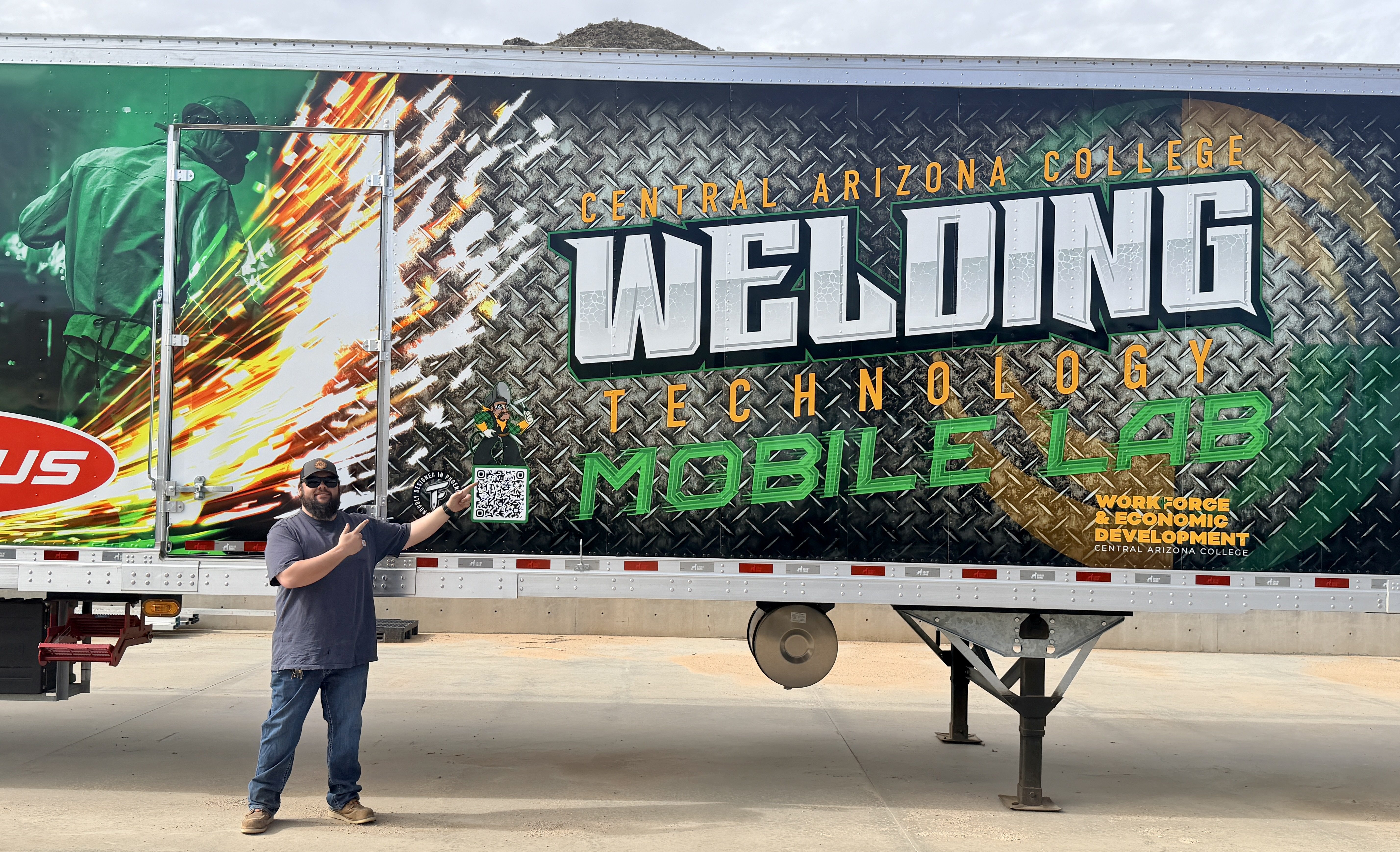
The Debut: FabTech Las Vegas
FabTech is the ideal venue to introduce the CAC portable welding lab. As North America’s largest metal forming, fabricating, welding, and finishing event, FabTech attracts manufacturers, fabricators, educators, and industry professionals from across the continent.
The lab is hosted in the Fronius booth — a fitting location given that Fronius is the major sponsor of the CAC weld lab. Fronius is one of the most respected names in welding technology, and their support of the mobile lab reflects a shared commitment to advancing welding education and workforce development across the industry.
For the mobile welding lab, FabTech offers an ideal opportunity to demonstrate capabilities to a focused audience that understands its value. Educators can see how the lab might serve their institutions. Business owners can evaluate it for employee training. Industry organizations can consider it for certification testing.
The Las Vegas debut provided valuable feedback from industry professionals who examined the lab with a critical eye, asking tough questions about capabilities, limitations, safety, and practical applications. This feedback will help refine operations and identify opportunities for improvement.
Demonstrating the lab at FabTech also positions CAC as an innovator in welding education. By showing what’s possible when you think beyond traditional classroom models, the program establishes itself as a leader in addressing the skilled trades workforce challenge.
The debut represents the culmination of extensive planning, but it marks just the beginning of the lab’s mission.
Impact Beyond the Classroom
The true measure of the portable welding lab’s success will be the number of opportunities created and barriers removed.
Consider a high school in rural Arizona, three hours from the nearest welding program. Budget constraints prevent the construction of a dedicated welding facility. The portable lab changes that equation entirely. The school can host the lab for a semester, introducing students to welding and helping them determine if it’s a career worth pursuing.
Or consider a manufacturing company that wants to cross-train production workers in basic welding skills. Sending multiple employees off-site disrupts production and costs both tuition and lost productivity. The portable lab provides training during work hours without major disruption. Workers gain valuable skills. The company gains a more capable workforce.
Think about a welder in a small town who needs to renew certifications. The nearest testing facility is a two-hour drive each way. When the portable lab visits their area, that becomes a twenty-minute drive. The convenience factor alone might determine whether they maintain their certifications or let them lapse.
At trade shows and career fairs, the lab offers hands-on demonstrations where attendees can try welding under supervision. That tactile experience — striking an arc and seeing molten metal flow — creates a connection that no video can match. Someone who might never have considered welding suddenly sees its appeal.
The lab also serves as a bridge between education and industry. Companies can evaluate potential hires by observing them work in a training environment. Students gain exposure to a range of welding applications and industries. Experienced welders can use it for continuing education without extensive travel.
The Southwest and Beyond
The Southwest presents unique opportunities for the mobile lab. The region spans vast distances with diverse population centers. Major cities such as Phoenix, Las Vegas, Albuquerque, and Salt Lake City have substantial manufacturing and construction industries that require skilled welders. But between these cities lie rural and suburban areas where welding training might be hours away.
The region’s economic development increasingly focuses on advanced manufacturing, aerospace, renewable energy, and other industries requiring skilled welding. The Southwest also has a strong culture around skilled trades, with many families having multi-generational involvement in trades careers.
The region’s tribal communities represent another important opportunity. Many tribal nations work to develop economic opportunities for their members, and skilled trades offer good career paths. But geographic isolation can make accessing training difficult. A mobile lab that can deploy to tribal lands removes that barrier.
As Jordan and the CAC team expand the lab’s reach, the vision extends beyond the Southwest. The model works anywhere. Other regions facing similar challenges — rural areas far from training centers, communities with limited educational budgets, regions with growing manufacturing sectors but workforce shortages — could benefit from the same approach.
The mobile welding lab serves the same five-state geography we do. We work across Arizona, California, Nevada, New Mexico, and Utah — the same geography the CAC lab will serve. If your facility or program needs compliant air filtration for a welding environment, fixed or mobile, that’s the conversation we’re built for.
Building Tomorrow’s Welding Workforce Today
Every welder currently working will eventually retire. Many will retire within the next decade. Traditional approaches to welding education alone won’t solve this problem. We need programs that reach underserved areas. We need programs that meet learners where they are. We need programs that produce not just certified welders but professional, career-minded individuals ready to contribute from day one.
This is where Jordan Porterfield and the CAC team have the greatest impact. By recognizing that technical education must include professional development, they prepare students for career success. By embracing continuing education as a core value, they instill the mindset necessary for long-term career growth. By creating a portable welding lab, they remove barriers that prevent many people from accessing quality welding education.
The lab represents more than just equipment. It represents a commitment to solving real problems rather than just acknowledging them. It represents innovation in vocational education when innovation is desperately needed. It represents meeting people where they are and providing opportunities that might otherwise never exist.
The Professional Difference in Action
Return to that fundamental principle: technical skills are only half the equation. What do professional skills actually look like in practice?
- Reliability: Showing up on time, every time. Meeting deadlines. Following through on commitments. Being someone others can consistently count on.
- Communication: Asking questions when uncertain. Reporting problems promptly. Coordinating with team members. Understanding and following instructions.
- Problem-solving: Thinking critically about challenges. Troubleshooting equipment issues. Adapting when plans change. Finding solutions rather than just identifying problems.
- Safety mindset: Consistently following safety procedures. Identifying hazards. Understanding that shortcuts which compromise safety are never acceptable.
- Quality focus: Taking pride in workmanship. Understanding that quality work reflects on personal reputation.
- Adaptability: Handling changing priorities. Working effectively in different environments. Maintaining composure under pressure.
The CAC program weaves these professional skills throughout technical instruction. Students don’t learn professionalism as a separate topic — they practice it daily as part of their welding education. By the time they graduate, professional behaviors are habits.
Looking Forward
The portable welding lab’s debut at FabTech marks an important milestone, but it’s just the beginning. The true impact will unfold over the coming months and years as the lab deploys across the Southwest and beyond, touching lives and creating opportunities that wouldn’t otherwise exist.
Success will be measured in students who discover welding careers they love. In workers who gain skills that increase their earning potential. In companies that develop the workforce they need to grow. In communities that see economic development because they have skilled workers.
As the lab travels, it will carry not just equipment and instructional capability, but also a message: skilled trades matter, welding careers offer tremendous opportunities, and quality education should be accessible to everyone willing to learn.
Jordan Porterfield and the entire CAC welding team show up every day committed to providing that education and support. The portable welding lab extends that commitment beyond campus walls, enabling them to serve more students in more locations.
The mobile lab will soon be seen across the Southwest and beyond. But its real visibility won’t be in the equipment itself — it will be in the welders it helps train, the opportunities it creates, and the impact it has on the skilled trades workforce. That’s a vision worth celebrating and a story worth telling.
Need Compliant Air Filtration for Your Welding Program or Facility?
Whether you’re running a fixed training program, evaluating a mobile setup, or managing a manufacturing floor — OSHA air quality requirements follow the work. Our pass-or-free guarantee means every system we specify either passes inspection or we fix it at no charge.
Or start with our NFPA 660 Compliance Checklist to see where your current setup stands.
Frequently Asked Questions
Can a mobile welding lab meet OSHA air quality standards?
Yes — the standards don’t relax because the facility moves. OSHA’s permissible exposure limits for welding fume apply to a trailer-based lab exactly as they do to a permanent shop. The difference is engineering: a mobile lab has to capture fume at the source with equipment that sets up, tears down, and travels repeatedly without losing capture performance. Source-capture downdraft tables sized to the booths, filtering or exhausting to OSHA-defensible levels, are what make a mobile lab compliant rather than just ventilated.
Why are self-cleaning downdraft tables the right fit for a mobile welding lab?
A mobile lab can’t stop for filter service between every site, and it doesn’t have a maintenance crew following it around. Self-cleaning downdraft tables pulse the filters clean on a push-button cycle, so capture performance holds up day after day without anyone pulling cartridges in the field. They also capture right at the work surface, pulling fume and grinding dust down and away from the student’s breathing zone — exactly what you want when booths are packed tight into a trailer.
What welding fumes are most regulated by OSHA?
Hexavalent chromium and manganese drive most welding-fume compliance. Hex chrome forms when welding stainless and chrome-bearing alloys and carries one of OSHA’s most stringent permissible exposure limits; manganese is present in nearly all steel welding and has tightened scrutiny in recent years. Both are why opening a roll-up door isn’t a control — they call for source capture, and for hex chrome, HEPA-grade filtration. This is the same exposure picture that drives air quality requirements across welding and metal fabrication generally.
Does NFPA 660 apply to welding fume collection systems?
It can. NFPA 660 — the unified combustible dust standard effective January 1, 2026 — governs systems handling combustible particulate. Welding fume on its own usually isn’t the trigger, but grinding and finishing in the same lab can generate combustible metal dust, and once that dust is collecting in a filter, the standard’s requirements come into play. Whether it applies in a given lab depends on the materials being processed, which is one of the things a proper assessment is meant to determine.
How much does a dust collection system for a welding training lab cost?
It depends on the number of booths, the processes involved (TIG and MIG run cleaner than stick and grinding), and whether you’re filtering and recirculating or exhausting to atmosphere. A single-booth source-capture setup runs very differently from a multi-station lab on a central system. Rather than quote a figure that won’t fit your layout, our 2026 dust collection cost guide walks through the variables that actually move the number.
Related Resources
- Dust Collection System Cost Guide 2026
- Downdraft Tables
- Welding & Metal Fabrication
- Best Dust Collectors for Pharmaceutical Manufacturing
- Prosthetics & Orthotics Fabrication Dust Collection
- Dust Collection for Supply Houses
- Vocational & Trade School Air Filtration
- Explosion Protection Assessments
- Fronius Welding Technology
- Book Your Free Compliance Assessment