Your Cart
Product Spotlights
Dust collection equipment marketing usually reads the same: best-in-class, industry-leading, highest efficiency. None of that tells you whether a specific piece of equipment will actually solve the specific problem in your shop. The only thing that tells you that is whether someone has put the equipment into a real production environment and watched what happened.
This category is where we document what we’ve actually specified and stood behind in working manufacturing facilities. Not catalog pages. Not vendor brochures. Real product spotlights from real projects: what we chose, why, what it cost, and how it’s performed since.
If you’re trying to figure out whether a specific collector, filter, fume arm, or extractor is right for your application, these guides are the closest you’ll get to an honest answer without scheduling an assessment.
What you’ll find in this category
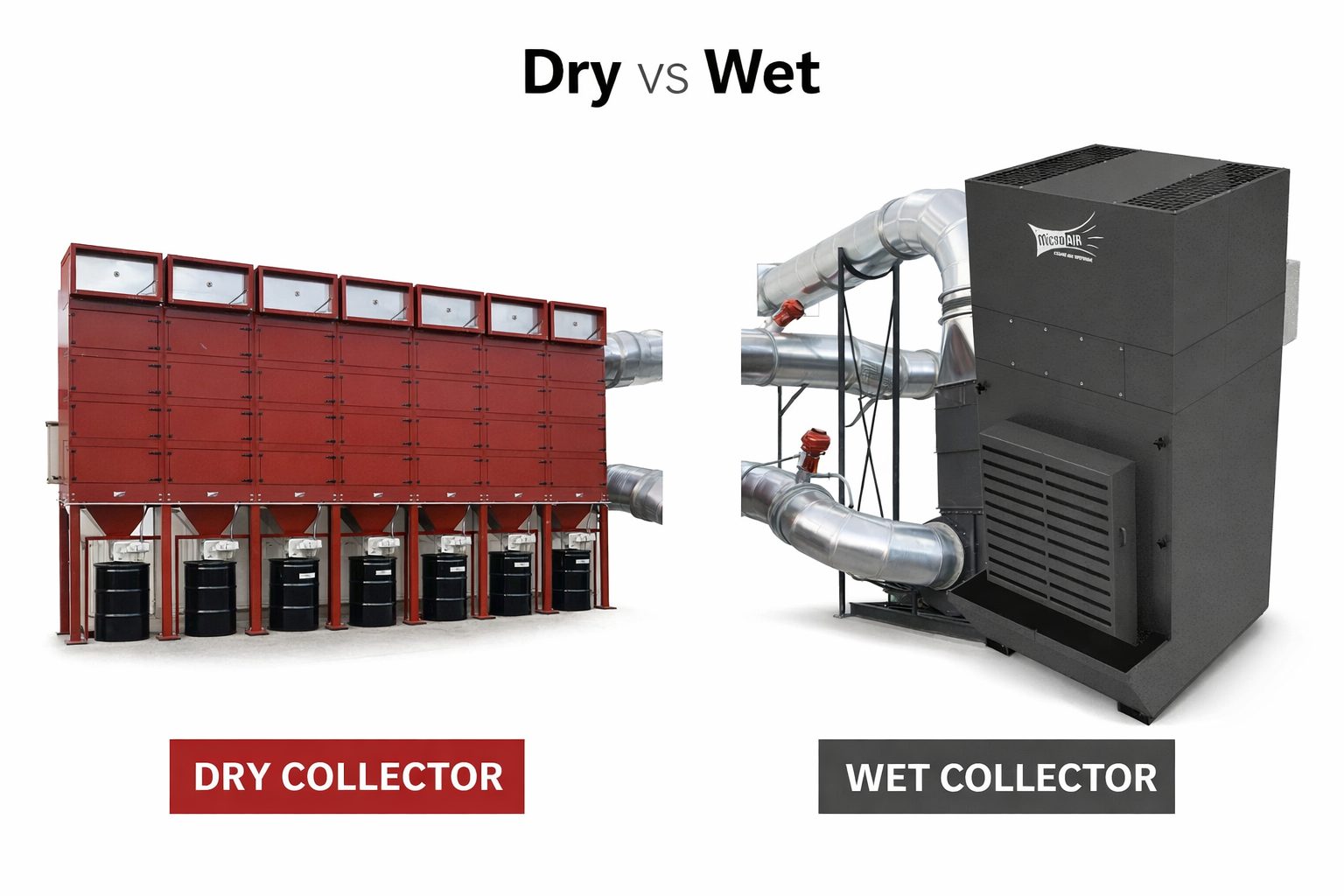
Baghouse Dust Collectors: when baghouse beats cartridge, what the durability numbers look like
Cartridge Dust Collectors: most common collector type for a reason, but not always the right one
Wet Collectors: reactive metals, sticky materials, when water is the only safe option
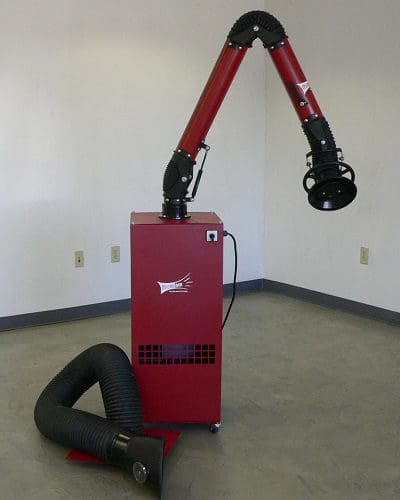
Source Capture Fume Arms: sizing, positioning, OSHA capture velocity requirements
The questions we get most
What dust collection equipment is actually worth the price premium?
Filter media. Nanofiber-coated cartridges typically cost 30 to 50% more than standard pleated cellulose but last 2 to 3x longer, capture finer particles, and run at lower Δp, which saves energy continuously. Construction materials matter too: stainless steel collectors cost 3 to 4x carbon steel but they’re the only option for pharma, food, and corrosive environments. Cheap-on-cost in the wrong place becomes expensive-on-rebuild.
How do you choose between dust collection equipment brands?
Not by brand reputation, by application fit. Every major manufacturer makes equipment that’s outstanding for the right application and underwhelming for the wrong one. The right choice depends on dust characteristics, CFM requirements, available space, indoor vs. outdoor placement, and explosion protection needs. We recommend based on what fits your dust, and we’ll tell you when a brand we don’t carry is the better answer.
Is OEM dust collection equipment worth it vs. aftermarket?
For filters, you have two good options. We carry OEM filters for DustHog and SmogHog, and direct replacement filters cross referenced to fit other major brands. For structural and electrical components like motors, fans and controllers, OEM is usually worth the premium for warranty coverage and parts availability over the system’s life.
When does new dust collection equipment make more sense than retrofitting?
When the existing system is more than 60% undersized, when the original collector predates current NFPA standards, when corrosion or structural fatigue compromises the housing, or when the dust type has changed (your operation evolved). Retrofit fits roughly 1 in 3 of the systems we evaluate; the other 2 in 3 are either undersized for current production or too aged to bring up to current code economically.
Your next step
If you’re evaluating a specific piece of equipment and want a real opinion based on real projects, book a free assessment. We’ll tell you what we’ve actually seen perform in conditions like yours, and what we’d recommend if it were our facility.